Refine Results
Region
News Category
Topic
Species Category

News

430 items match your filter criteria.

Free Course on Boating Safely Around Whales Expands to West Coast and Hawaiʻi

We have expanded a free boater safety course for New England and the Mid-Atlantic to include the West Coast and Hawaiʻi. See a Spout? Watch Out!’s course offers tips on safely navigating waters shared with protected marine species like whales.
June 10, 2026 - Feature Story ,
Logo for See a Spout? Watch Out! featuring an orange ship wheel surrounding a blue circle with a white whale fluke and spout emerging from blue water

Celebrating Earth Day with NOAA Fisheries

Every day is Earth Day at NOAA Fisheries!
April 20, 2026 - Feature Story ,
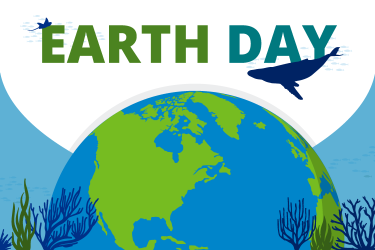
A graphic with the text "Earth Day" showing a globe, fish, corals, a whale, and seagrass. Celebrating Earth Day at NOAA Fisheries. Credit: NOAA Fisheries

The Ocean’s Underwater Ears: Tracking North Atlantic Right Whales Using Sound

Scientists are acoustically monitoring endangered North Atlantic right whales in the Southeast U.S. The data we collect help us understand their presence in their calving habitat.
March 02, 2026 - Feature Story ,
Right whale #1515 “Ghost” was sighted with a calf on January 30, 2026, just offshore of Flagler Beach, Florida. Ghost is at least 41 years old, and this is her ninth calf. Right whale #1515 “Ghost” was sighted with a calf on January 30, 2026, just offshore of Flagler Beach, Florida. Ghost is at least 41 years old, and this is her ninth calf. Credit: Marineland Right Whale Project/Jeff Greene (Permit # 26562)

Messaging Mariners in Real Time to Reduce North Atlantic Right Whale Vessel Strikes

A new real-time messaging network uses a well-established maritime navigation safety technology—the Automatic Identification System—to reduce the risk of vessel strikes involving North Atlantic right whales.
February 12, 2026 - Feature Story ,
A right whale mom and calf pair swimming at the surface of the ocean. Perspective is from above, looking down. North Atlantic right whale #4150 “Accordion” and her first calf swimming close to the shipping lanes at the entrance to the Port of New York and New Jersey. Accordion is named for the propeller scars on her back that resemble the musical instrument. Credit: NOAA Fisheries/Tim Cole, taken under NOAA permit #27066.

Follow the Whales: How Tagging Supports Whale Research and Rescue

To track the movements of whales, scientists and emergency responders use electronic tags. These tags rely on the same technology—telemetry—that lets people navigate with GPS or find a lost smartphone.
February 11, 2026 - Feature Story ,
Acoustic recording tags on the back of a partially submerged killer whale Digital acoustic recording tags temporarily attached to killer whales measured vessel noise reaching the whales. The suction cup tags eventually fall off without harming the whales. Photos taken under NOAA Fisheries and Department of Fisheries and Oceans research permit (No.781-1824 and 16163).

Celebrate Whale Week with Us: A Message from Director of NOAA Fisheries Office of Protected Resources Kim Damon-Randall

Join us for a celebration of whales while learning more about the types of technology we use to study these iconic animals, how to watch whales responsibly, and how you can help whales.
February 11, 2026 - Leadership Message ,
Photograph of a gray whale mother and her calf born this year on their northbound migration. Gray whale mother and her calf on their northbound migration. Credit: NOAA Fisheries