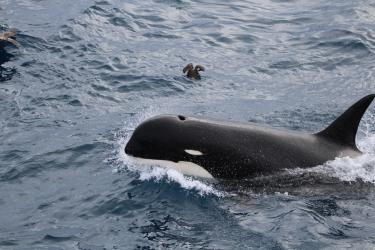
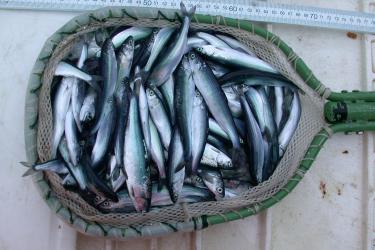
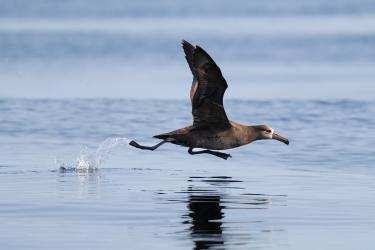
Capelin are a major forage fish species in high-latitude marine ecosystems. Recent heatwaves in Alaska led to a dramatic decline in capelin abundance, which can have major impacts on predators, including marine mammals, seabirds, and fish.
Dolphins and porpoises are both cetaceans, but they have distinct characteristics that set them apart. Learn how to recognize a dolphin vs. a porpoise.
Researchers identify distinctive genetic stocks of Pacific cod in Alaska and use that information to build a cost-effective genetic tool to answer important ecological questions for the species.
It’s Seal and Sea Lion Week! Join us as we follow the journey of a resilient endangered pup who found a second chance after a life-saving trip from Alaska to California.
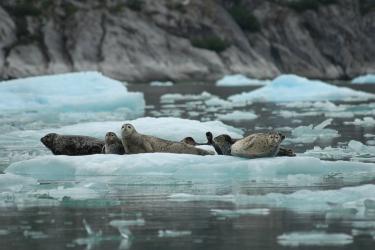
Scientists flew more than 24,000 miles over sea ice to study the abundance and distribution of seals in the Bering, Chukchi, and Beaufort seas. This was the first time the seals’ entire geographic range in U.S. waters was surveyed in one season.
New research on haul-out behavior helps to more accurately estimate the number of ice seals in the Arctic, and improve our efforts to conserve and monitor their populations.
A new study uses spatial models to precisely map how Pacific cod prey on commercially important snow and southern Tanner crabs in the eastern Bering Sea.