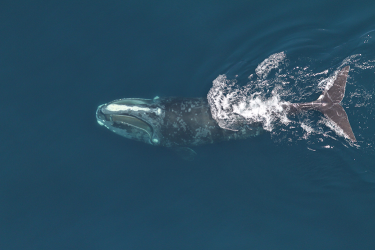
Our marine mammal network partners are leveraging the Prescott Grant Program's competitive grants to improve their stranding response and investigation capabilities for whale conservation.
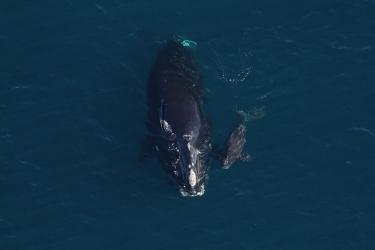
An update from our experts on the status of North Atlantic right whales, and our plans to use Inflation Reduction Act funds for right whale conservation.
NOAA Fisheries records evidence of endangered Rice’s whales in the western Gulf of Mexico. These findings demonstrate their regular occurrence in waters offshore of Texas and the first evidence of Rice’s whales offshore of Mexico.
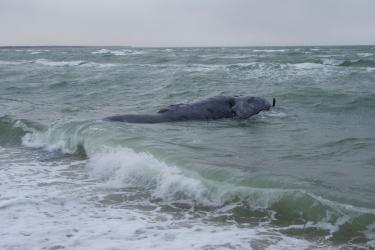
North Atlantic right whale on Martha’s Vineyard had a chronic entanglement and was seen in poor health before its death. Experts are examining the rope and other samples collected from the whale.