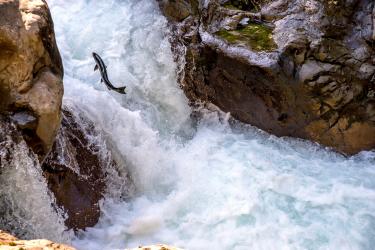
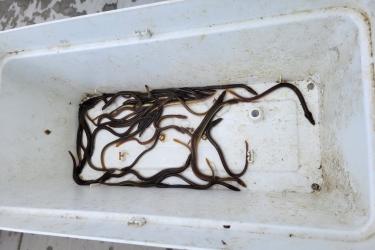
Through the Bipartisan Infrastructure Law, NOAA is seeking proposals for fish passage projects that will reopen migratory pathways and restore access to healthy habitat for fish around the country.
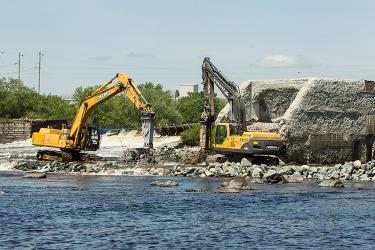
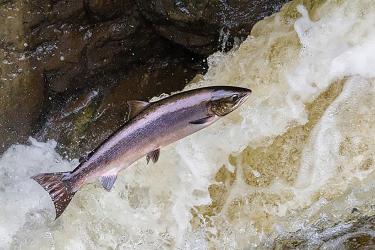
Habitat restoration efforts on the Penobscot River in Maine will help Atlantic salmon population recover and support ancestral traditions of the Penobscot Nation.
Forty-six projects will reopen migratory pathways, restore access to healthy habitat for fish, and build tribal capacity to develop and implement fish passage projects.
Supporting veterans is imperative to our agency. NOAA VetCorps gives veterans the training and tools to pursue careers in habitat conservation and restoration.
Through the Bipartisan Infrastructure Law and Inflation Reduction Act, NOAA is seeking proposals for fish passage projects that will reopen migratory pathways and restore access to healthy habitat for fish around the country.
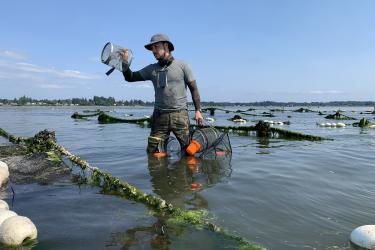
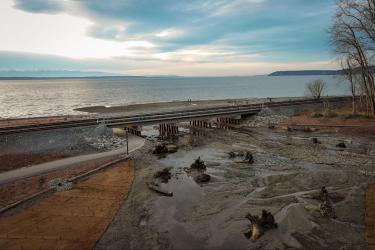
A NOAA-supported project in the Puget Sound region reconnected and restored historic habitat for migrating salmon, while improving public access for park visitors.
In the years since NOAA and partners removed Bloede Dam, monitoring has found evidence of alewife and blueback herring using the reopened habitat on the Patapsco River.