About the Species
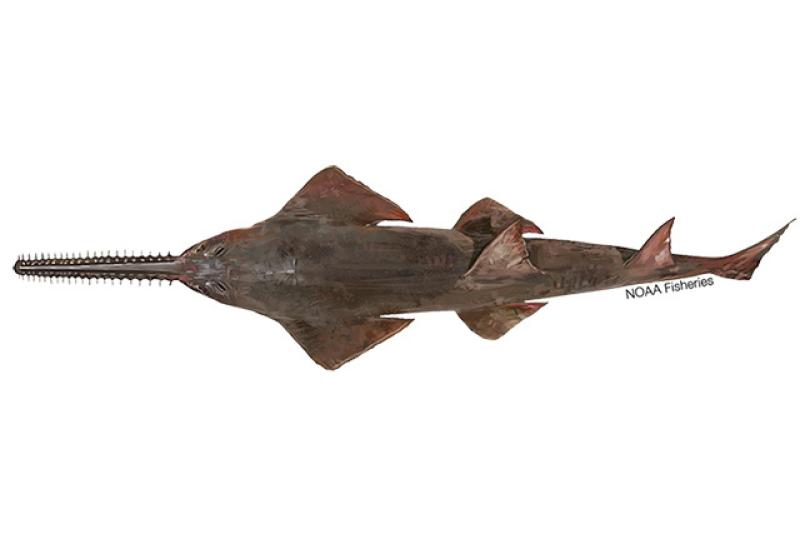
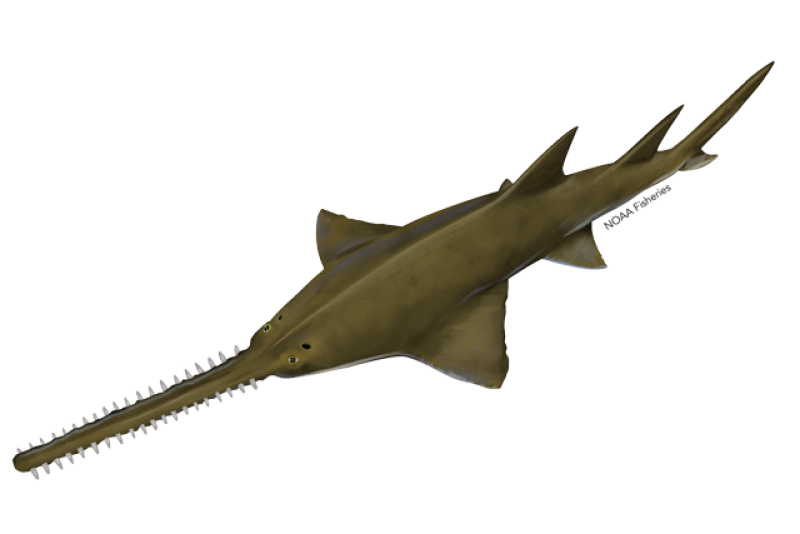
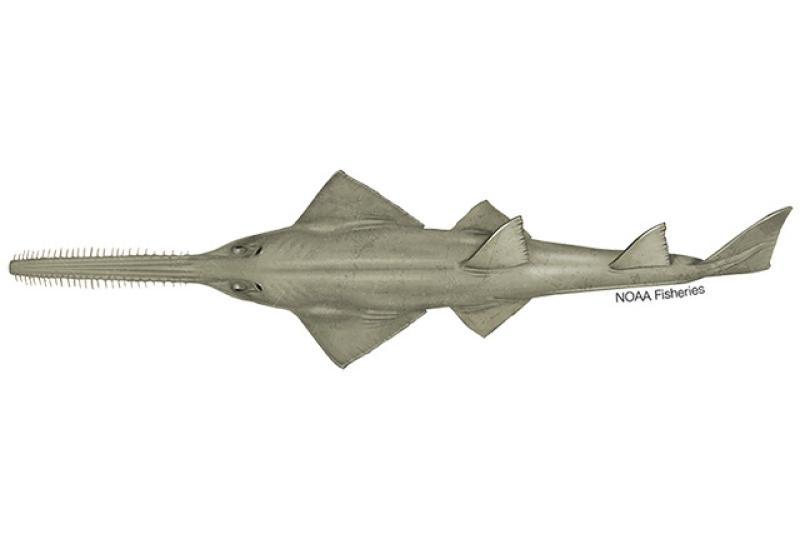
Dwarf sawfish are related to sharks, skates, and rays. Like these related species, dwarf sawfish have skeletons made of cartilage. They get their name from their “saws,” long, flat snouts edged with teeth. Early sawfish first appeared in the ocean about 100 million years ago and modern sawfish species have existed for about 56 million years.
Today, dwarf sawfish are found only in the Indo-Pacific Ocean. The main threats to the dwarf sawfish include habitat loss and entanglement. Under the Endangered Species Act, NOAA Fisheries must list threatened and endangered marine species regardless of where they are found.
Appearance
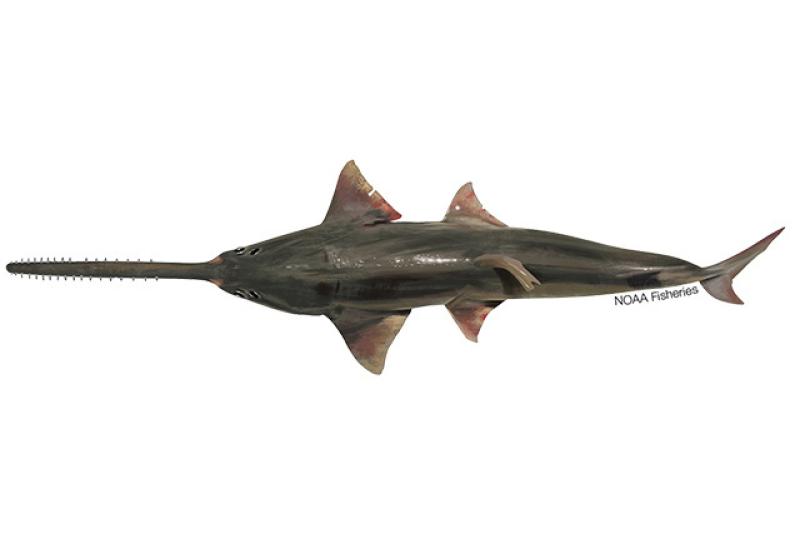
Dwarf sawfish are smaller than other sawfish, with the largest reaching a length of about 11 feet. Like other sawfish species, dwarf sawfish are known for their “saws,” flat snouts edged with 19 to 23 teeth (males) and 20 to 22 teeth (females). Their shark-like bodies are olive-brown and covered with teeth-like scales called dermal denticles. Dwarf sawfish have gill slits on their underside.
Dwarf sawfish can be confused with related species, including the smalltooth sawfish and largetooth sawfish.
Behavior and Diet
Dwarf sawfish use their saws to find, stun, and kill their prey. They eat mostly small schooling fish, but also sometimes eat crustaceans and mollusks.
Where They Live
Historically, dwarf sawfish were found in the Indo-Pacific, western Pacific, and eastern Indian Oceans. Today, their range is limited to the waters of north and northwest Australia. There are now very few records of dwarf sawfish in the Indian Ocean or other parts of the Indo-Pacific outside of northwest Australia.
Dwarf sawfish occur in the shallow waters of coasts and estuaries, where rivers meet the sea. They are sometimes found in rivers up to 6 miles upstream. Like other sawfish species, they prefer the muddy bottoms of their waters.
 World map providing approximate representation of the dwarf sawfish's range.
Lifespan & Reproduction
Dwarf sawfish can live for more than 50 years. Adults reach sexual maturity when they are 6 to 7 years old.
Female dwarf sawfish are ovoviviparous, meaning that mothers hold their eggs inside of their bodies until the young sawfish are ready to be born.
Threats
Habitat Loss
Shallow habitats provide important nurseries for young dwarf sawfish. However, many of these habitats have been damaged or lost.
Entanglement and Bycatch
Dwarf sawfish can become entangled or captured in commercial fishing gear, including nets, lines, and trawls. These interactions can cause the fish to be injured or killed.
Scientific Classification
| Animalia |
Chordata |
Chondrichthyes |
Pristiformes |
Pristidae |
Pristis |
clavata |
Last updated by NOAA Fisheries on 11/19/2024