Green Sawfish
Pristis zijsron
Protected Status
Quick Facts
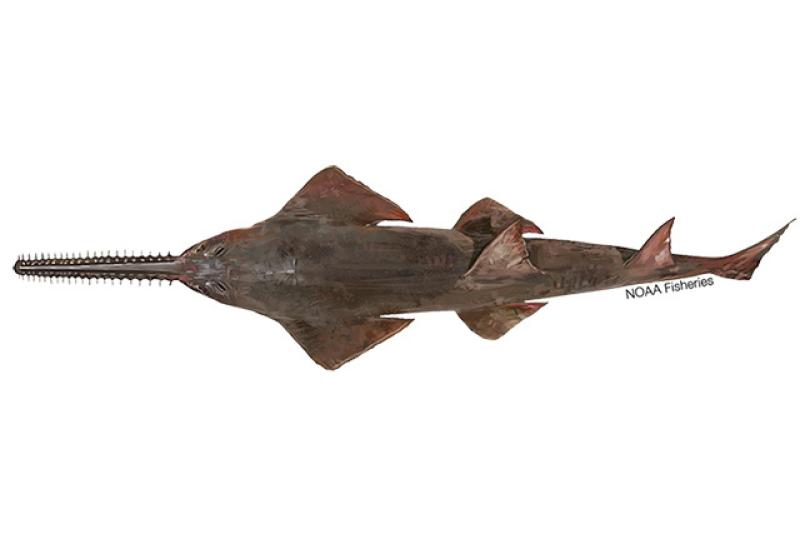
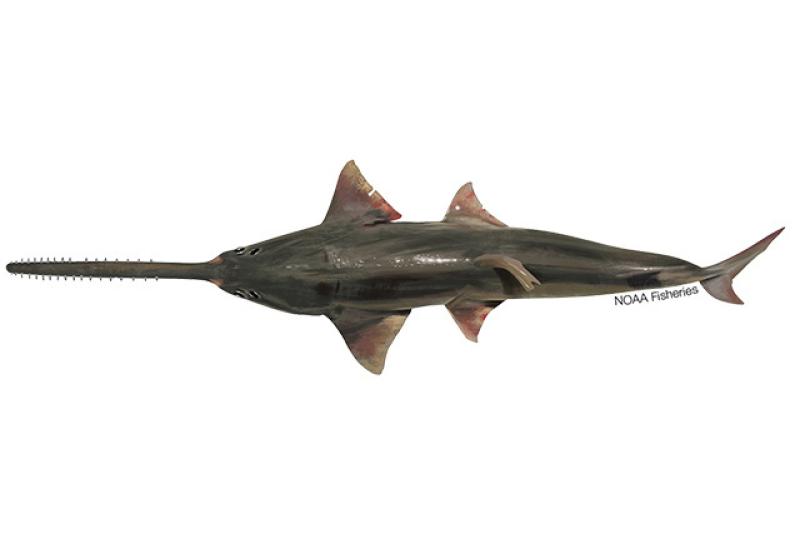
Green sawfish - Photo: NOAA Fisheries
About the Species
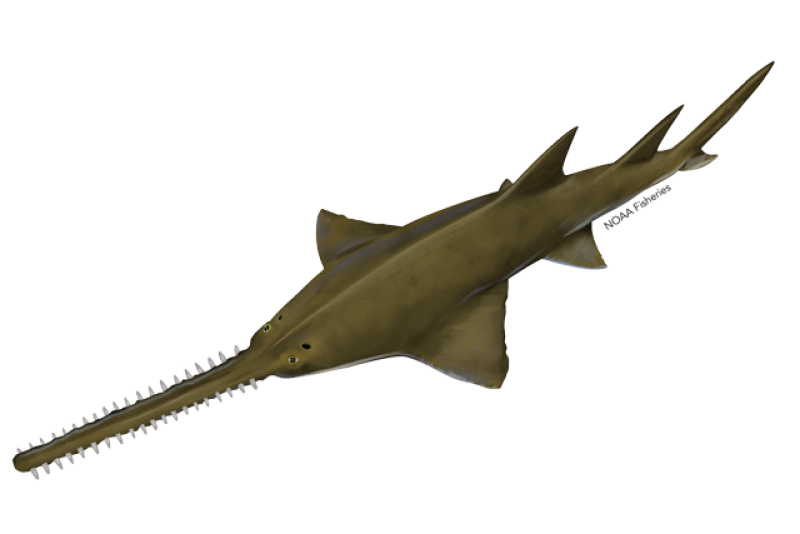
Green sawfish - Photo: NOAA Fisheries
The green sawfish belongs to a group of fish—called elasmobranchs—that includes rays, skates, and sharks. The green sawfish is one of five species of sawfishes. Although sawfishes have shark-like bodies, they are actually a type of ray. They are named after their "saws" (rostra)—long, flat snouts edged with teeth. The green sawfish is listed as endangered throughout its range under the Endangered Species Act.
Appearance
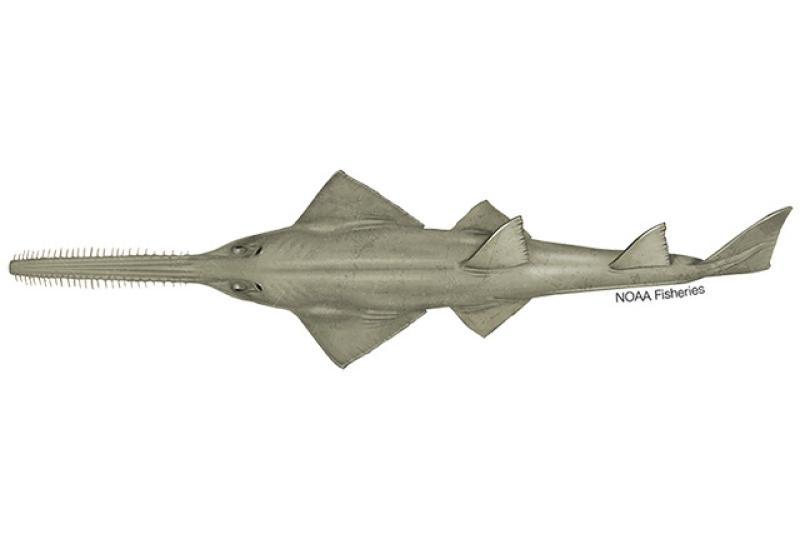
Green sawfish are generally greenish-brown to olive on their dorsal (top) surface and white on their underside. They have 23-34 rostral teeth on each side of the rostrum. The gap between rostral teeth increases posteriorly along the rostrum with the largest gaps closest to the body. It closely resembles the smalltooth sawfish, though it is found in a different part of the world.
Where They Live
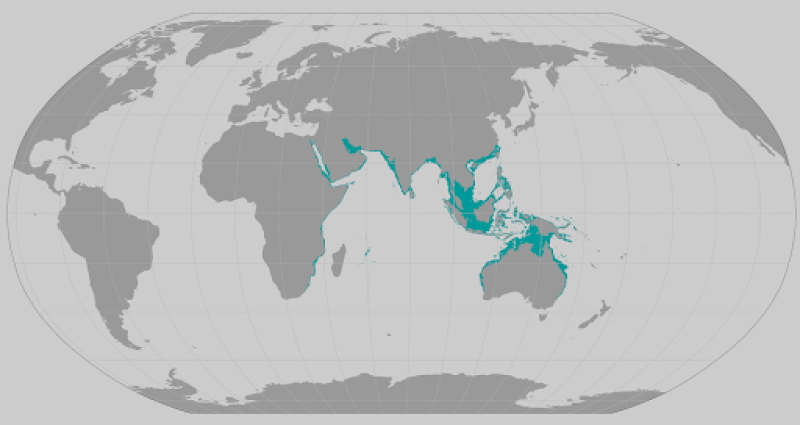
Many islands within the Indo-Pacific region contain suitable habitat for sawfish, but few records are available, possibly due to the lack of surveys or data reporting. There is some evidence from the Persian Gulf and Red Sea (e.g., Sudan) of small but extant populations (A. Moore, RSK Environment Ltd., pers. comm. to IUCN, 2012). Green sawfish are currently found primarily along the northern coast of Australia, but all sawfish species have undergone significant declines in Australian waters. The southern extent of the range of green sawfishes in Australia has contracted (Harry et al., 2011). Green sawfish have been reported as far south as Sydney, New South Wales, but are rarely found as far south as Townsville, Queensland (Porteous, 2004).
World map providing approximate representation of the green sawfish's range.
Lifespan & Reproduction
Green sawfish are "yolk-sac viviparous"—their young are attached to yolk sacs that nourish the embryo inside the mother's body and emerge as fully developed pups. The pups are born with their saw fully developed, but it is very flexible and sheathed to avoid injuring the mother at birth (the sheath dissolves quickly thereafter). A mother green sawfish can have up to 12 pups per litter. Newborn sawfish are approximately 2.5–3 feet long at birth. Green sawfish reach sexual maturity around 9 years of age and lengths of 11 feet.
Scientific Classification
| Kingdom | Animalia | Phylum | Chordata | Class | Chondrichthyes | Order | Pristiformes | Family | Pristidae | Genus | Pristis | Species | zijsron |
|---|
Featured News
The Endangered Species Act: 50 Years of Conserving Species
Last updated by NOAA Fisheries on 08/14/2025
Management Overview
The green sawfish is listed as endangered under the Endangered Species Act.
Additionally, the green sawfish is listed under:
- Appendix I of the Convention on International Trade in Endangered Species of Wild Fauna and Flora (CITES)
Regulatory History
In 2010, NOAA Fisheries received a petition to list six species of sawfish, including the green sawfish, as threatened or endangered under the Endangered Species Act. In our 90-day finding, we concluded that the petitioned action may be warranted. After completing a review of the species’ status, we proposed to list the green sawfish as endangered and requested comments from the public. In December 2014, NOAA Fisheries listed the green sawfish as endangered under the ESA.
Key Actions and Documents
Actions & Documents
More Information
Last updated by NOAA Fisheries on 08/14/2025